Posts

Showing posts from January, 2022

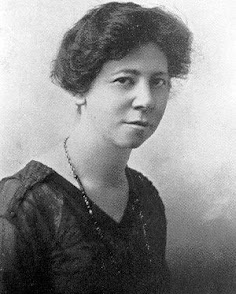
Mabel Dunham: Librarianship as a Profession for Women, May 1921
Image
    At the end of her year as president of the Ontario Library Association in March 1921, B. Mabel Dunham, the chief librarian of the Kitchener Public Library since 1908, selected a topic of major importance at the OLA’s twenty-first meeting: “Library Work as a Profession for Women.” For the most part, press reports shortened the topic by omitting “for Women” but briefly reported her main remarks. Library journals, such as Public Libraries , which covered the meeting in its May issue, had little to say about Dunham’s speech. It reported, “Miss Dunham’s paper was a very able plea for library work as a means of service to the community and development of one’s highest personality.” The Library Journal reported that “Miss Dunham ranks library work as one of the high callings for women, inasmuch as it presents an opportunity for service to the community and for building up one’s own character and personality.” The synopsis in the May issue of the Ontario Library Review obse...

Presidential speech by Mary J.L. Black to the Ontario Library Association, 1918

Image
Mary J.L. Black becomes President of the Ontario Library Association 1917–18   On April 10, 1917, Mary J.L. Black was elected president of the Ontario Library Association (OLA). She was the first female to hold this position. In the first part of the twentieth century, presidential positions for women in Anglo-American library associations were unusual. Theresa Elmendorf was elected president of the American Library Association in 1911, followed by Mary Wright Plummer in 1915. It was not until half a century later, in 1966, that the Library Association (UK) elected Lorna Paulin president. Mary Black and Helen Gordon Stewart, who was elected president of the British Columbia Library Association in September 1917, were the first women to break the presidential gender barrier in Canadian librarianship. Their executive offices came in the same year that women over the age of 21 who were born or naturalized British subjects became legally eligible to vote in provincial elections. Black ...

Alexander Calhoun defends The Grapes of Wrath in Calgary, 1940

Image
“The problem of obscenity in books is undoubtedly a very thorny one for librarians. Possibly the only confident statement one dare make on the subject is that there has been in the last generation a marked increase of tolerance on the part of the public toward obscenity in literature. In the main, I think, this is a sign of progress.” — Alexander Calhoun, March 16, 1940, Calgary Herald .      When the Viking Press published John Steinbeck’s The Grapes of Wrath in 1939, it was generally greeted with critical acclaim in North America. Steinbeck’s masterful story followed the fictional Joad family’s trek to the promised land of California and their struggles once heartbreaking reality shattered their hopeful vision. The novel quickly reached the top of bestseller lists. Its renown gained Steinbeck a Pulitzer Prize for Novels and a National Book Award for Fiction within a year. The 1940 20th Century-Fox film version starring Henry Fonda was equally successful at box off...

Marshall McLuhan speaks to Ontario librarians about books and media, 1954–56

Image
Herbert Marshall McLuhan, 1945  By the mid–1950s, prominent speakers had become a fixture at Ontario Library Association (OLA) annual conferences. Such was the case in mid-May 1956 when the OLA met at Oshawa’s new McLaughlin Library, which had opened in 1954. This OLA conference was shortened to two days because the Canadian Library Association would meet at Niagara Falls in June. Nevertheless, four hundred and twenty-five persons registered; it was one of the best attended conferences to date. A notable attraction was an emerging University of Toronto professor at St. Michael’s College, Marshall McLuhan. Marshall McLuhan Addresses Librarians about the Future of the Book in Oshawa, 1956 After he began teaching and researching, McLuhan started to articulate how new electronic media would fundamentally change the role of traditional printed publications and how institutions, such as libraries, would respond to these shifts. He addressed delegates about “The Future of the Book” at a...