Posts

Showing posts with the label toronto public library

Early Toronto Libraries, 1810–1830: Toronto Library and York Subscription Library

Image
The Town of York was founded in 1793 by Lieutenant-Governor John Graves Simcoe as the capital of Upper Canada. York replaced Newark (Niagara-on-the-Lake), the capital from 1791-93. The town was an established frontier trading site with indigenous people and possessed a good harbour for transport and farmland that attracted settlers. About 1,000 people—settlers, traders, officials, and soldiers—populated the settlement in 1800. With increasing growth over the next quarter century, York became the centre of Ontario government, business, and cultural life. It was renamed Toronto in 1830 in recognition of its indigenous roots and incorporated as a small city in 1834 with a population of about 9,000. Books and the value of literacy in a colonial setting were important elements of cultural life fostered by the Upper Canadian elite—Loyalists, government and church officials, wealthy merchants and investors, and emerging career professionals such as lawyers and doctors. Jointly, this conserv...
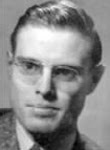
Citizen Participation in Library Decision-Making: The Toronto Experience by John Marshall (1984)

Image
Citizen Participation in Library Decision-Making: The Toronto Experience edited by John Marshall. Metuchen, New Jersey: School of Library Service, Dalhousie University in association with the Scarecrow Press, 1984. p. 392., illus. and maps. John Marshall, n.d. Toronto Reform Movement in 1970s and Toronto Public Library In the early 1970s, reform-minded politicians began to dominate the old city of Toronto council. Strong mayors, such as David Crombie (1972-78) and John Sewell (1978-80), as well as new city councilors were concerned with the direction of urban development, expanded social services, and transparency in politics. They believed community initiatives and citizen action trumped centralization and bureaucratic management. In the previous decade, the Toronto Public Library (TPL) had committed to a long-range plan of building larger regional libraries to better serve the growing population. However, there was a legacy of many older, smaller branches extending back to the Car...

Libraries of Metropolitan Toronto (1960) by Ralph Shaw

Image
Libraries of Metropolitan Toronto: A Study of Library Service Prepared for the Library Trustees’ Council of Toronto and District . By Ralph Robert Shaw. Toronto: Library Trustees’ Council of Toronto and District, 1960. Illustrated, pp. 98. In the late 1950s, there were thirteen library boards serving the metropolitan area of Toronto. One board, Toronto, served 658,000 people. Twelve adjacent boards served 742,000. More centralized regional services for police and other area concerns were established in 1953 through a provincial act creating a Metropolitan government. A few years later, in November 1958, the Metro Council authorized a group of trustees, the Council of Library Trustees of Toronto and District, first formed in 1954, to prepare a detailed survey of the thirteen area municipalities of Metropolitan Toronto. The Council believed systematic coordination was the most logical way to achieve satisfactory area-wide service. The trustees, led by Richard Stanbury from the township o...

Toronto’s Free Library: Facts for the Citizens (1881) by John Taylor

Image
Toronto’s Free Library: Facts for the Citizens by John Taylor. Toronto: n.p., signed 25 October 1881,  4 p., tables. Alderman John Taylor John Taylor was born in Leek, Staffordshire, England, in 1841. He came to Canada as a teenager with his family when he was fourteen. His early business training was with Taylor Brothers, paper makers, a firm that was at the forefront in an expanding paper industry based on the use of wood pulp. After leaving the firm, John ventured into the commission business with J.L. Morrison. He eventually established his own major factory specializing in the manufacture of soap, John Taylor & Company, on the Don River. Taylor became a director of the Toronto Mechanics' Institute in the 1870s, showing an interest in the welfare and education of working people. He was treasurer of the Institute in 1880. He was also a member and president of the St. George's Society which sought to assist immigrants and those in need.  He also entered the arena of...

Notes by the Way on Free Libraries and Books (1882) by John Hallam

Image
Notes by the Way on Free Libraries and Books with a Plea for the Establishment of Rate-Supported Libraries in the Province of Ontario by John Hallam. Toronto: Globe Printing Company, 1882, 36 p. tables. John Hallam was born in Chorley, Lancashire, England, in 1833, the son of a poor workingman. When he was still a boy, he worked in a cotton mill to help his parents. In his early twenties, Hallam emigrated to Canada, arriving in Toronto in 1856. For several years he took on menial work as a labourer but managed to save money to open a small business as a hide, wool and leather merchant. Through his own exertions and business acumen he developed a thriving business that became a leading Canadian importer and exporter, including a branch plant in Winnipeg. A political Liberal of the Lancashire type who preferred individual liberties, popular suffrage (including universal suffrage for women), and free trade, Hallam was out of step with the established Conservative norms which characteri...

George Locke and the Toronto Public Library

Image
George H. Locke, chief librarian of the Toronto Public Library between 1908 and 1937, was Canada’s foremost librarian in the first part of the twentieth century. During this period, free public libraries and librarianship in Ontario expanded rapidly due to the philanthropy of Andrew Carnegie, improvements in library education, and the influence of American library developments. George Locke’s Contributions to the Toronto Public Library Locke’s outlook in library work was guided by his Methodist upbringing, his association with John Dewey’s contribution to American progressive education, and the Anglo-Canadian academic tradition of British Idealism in the late nineteenth century. These religious and intellectual strands encouraged personal action to seek solutions to improve social conditions. As director of Toronto’s library system, he brought his ambitious ideas to bear in many ways, most notably by building neighbourhood branches, establishing library services for children and young...

Toronto Public Library in 1842

Image
The Institution shall be called The Toronto Public Library—and the date of its commencement is hereby declared to be the 27th of October, 1842. So read a small pamphlet that outlined the bylaws and the constitution of yet another Canadian subscription library formed in the first part of the nineteenth century. The entry fee for a subscriber was £1, the quarterly subscription 2 shillings/6 pence, and payment to the Librarian 1 shilling. Like many of the more than fifty subscription libraries established in the Canadian colonies before 1850, the library did not enjoy a long lifespan. Until now, its formation has not attracted much attention, but a perusal through the pages of the British Colonist for the last months of 1842 provides insight into the slow development of the 'public library' concept in Upper Canada (called Canada West from 1841-66 and Ontario after 1867) early in the 1840s. My interest in this particular library is its name--Toronto Public Library--and the rat...

The Most Attractive Resort in Town by Barbara Myrvold (2009)

The Most Attractive Resort in Town: Public Library Service in West Toronto Junction, 1888-2009 by Barbara Myrvold. Toronto: Toronto Public Library Board, 2009. 2nd revised and expanded edition, paper, 82 p., 126 illus. Available online at Toronto Public Library .        Originally published in 1989 with co-author Barbara Forsyth to record the 80th anniversary of the Annette Street branch (1909-1989) of Toronto Public Library, this updated 2009 version is a welcome addition to histories of community library service in Canada. The book title derives from a quote by the Women's Christian Temperance Union when the West Toronto Junction Mechanics Institute was formed in 1888. The WCTU obviously hoped the influence of book reading and social amusements provided would divert young men from less uplifting pursuits in this growing community of 3,000 people. Self-improvement is an important theme in library history, and there are frequent references to this trait ...

Places to Grow: Public Libraries and Communities in Ontario, 1930–2000 by Lorne Bruce

Image
Places to Grow This monograph is a follow-up to my previous history of public library growth in Ontario, Free Books for All: The Public Library Movement in Ontario, 1850-1930 , published by Dundurn Press in 1994. I have recently updated Places in 2020 with additional materials—references, tables, images, and a revised index. You can read the updated version of  Places to Grow for free at the following link  on the Internet Archive or a preview edition on Google Books . Most of the revisions and additions relate to issues and developments after 1985. The book unfolds in a chronological narrative, using primary sources such as government correspondence, library inspector diaries, and board memoranda, as well as many secondary sources, to explore how libraries were integrated into Ontario's social and political fabric. Researchers will find 1,200 footnotes that guide them to additional sources of information they may be pursuing throughout the 500 pages of this book. Pl...

LILLIAN HELENA SMITH WEBSITE

There are not many websites dedicated to Canadian librarians, so these web pages on Lillian H. Smith are very welcome: just go to Lillian H. Smith to check through extensive biographic and bibliographic information, images, and many other features about her life. There is a wealth of information available here on Smith's career, her writings, and research about her work. Smith started at the Toronto Public Library in 1912 as the first trained children's librarian in Canada. She stayed for four decades before her retirement and developed the finest children's services in the county. Toronto's branch, the Lillian H. Smith Library, opened in 1995 to honour her contributions. This terrific site was created by Michael Manchester at the University of Western Ontario. My biographic outline of Smith's career is at this blog link .